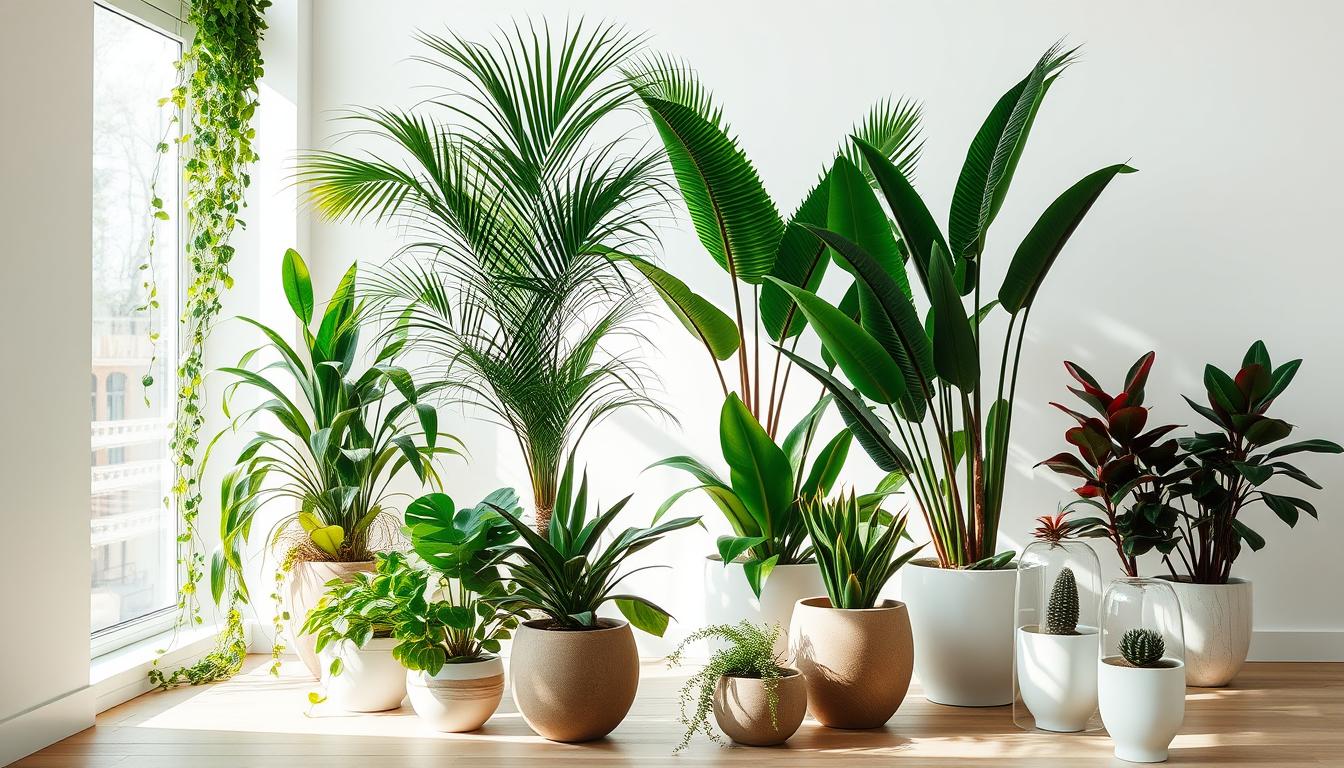
Welcome to your new guide on indoor plant care! Turning your space green is rewarding. But, you need to learn some key tips. This guide will help you pick easy plants, manage light, and water right. With this information, you can grow healthy plants that make your home look great.
Key Takeaways
- Understand the specific care needs of each plant to ensure they thrive indoors.
- Select beginner-friendly houseplants like Snake Plant, Pothos, and ZZ Plant.
- Learn about different light conditions and how to adjust your environment accordingly.
- Follow a proper watering schedule and use the right tools for hydrating your plants.
- Regularly inspect and manage pests and diseases to maintain plant health.
Introduction to Indoor Plant Care
Indoor plants make our homes look nice and improve the air. Knowing how to keep them healthy is key for a great indoor garden.
Choosing the right plants is tough for beginners. Each plant needs certain light, water, and soil. Knowing this helps avoid mistakes.
Too much water and not enough light are big mistakes. They can kill your plants. Be careful with how you take care of them.
Start taking care of plants the right way. Check the soil, know how much light they need, and water them right. Doing this will help your indoor garden grow beautifully.
Choosing the Right Houseplants for Beginners
Starting with indoor plants can be rewarding. It’s best if you pick plants that are tough and easy to care for. We will talk about the best indoor plants for beginners. These plants don’t need much and are great for those new to indoor plant care. They help make your home green and lively.
Snake Plant
The Snake Plant, or Sansevieria, is very tough. It does well in many light conditions, from dim to bright. It likes to be watered only after drying out. That’s ideal for beginners. Plus, it’s great for making indoor air cleaner.
Pothos
Pothos, also known as Devil’s Ivy, grows vines and adapts well to different lights. It’s happiest in bright, indirect light but can handle the dark too. Only water it when it’s dry. It’s easy for newbies and looks good in homes.
ZZ Plant
The ZZ Plant, or Zamioculcas zamiifolia, is super for beginners. It’s okay with low light and doesn’t need much water because it stores water in its roots. Its shiny, dark green leaves are pretty in any house.
Spider Plant
The Spider Plant grows fast and is easy to care for. It likes lots of light but can manage in darker spots. Water it a bit, letting it dry between times. It also makes little plants you can grow, which is fun.
Peace Lily
Peace Lilies are great for beginners who like plants indoors. They do well in low light and tell you when they’re thirsty by drooping. Keep the soil moist but not too wet. Their white flowers make any room look nice.
| Plant | Light Conditions | Watering Needs |
|---|---|---|
| Snake Plant | Low to Bright Indirect Light | Allow soil to dry completely between waterings |
| Pothos | Bright, Indirect Light (tolerates low light) | Water when soil is dry to touch |
| ZZ Plant | Low, Indirect Light | Infrequent, let soil dry out |
| Spider Plant | Bright, Indirect Light (handles low light) | Regularly, letting soil dry slightly |
| Peace Lily | Low to Moderate Light | Keep soil consistently moist |
Understanding Light Conditions
Good lighting is very important for keeping houseplants healthy. It’s key to know your indoor light conditions. This helps you make the best home for your plants. Each type of plant needs a certain kind of light. We’ll look into how different kinds of light affect plant care.
Bright, Direct Light
Sun-loving plants like succulents and cacti need bright, direct light. This light often comes through south-facing windows. But, too much sun can harm them. To keep plants safe, you can hang sheer curtains. They soften the sunlight.
Bright, Indirect Light
Bright, indirect light is gentle and comes from places like east-facing windows. Plants such as peace lilies and pothos love this. Moving plants a little away from the window helps. Or, use a light curtain for the perfect light.
Medium, Indirect Light
Medium, indirect light isn’t too strong. It’s great for ZZ plants and snake plants. It comes from north-facing windows or bright indoor areas. These plants are happy in moderate light. Caring for them in these conditions is easy.
Low Light
Some areas have low light, like bathrooms or rooms with small windows. Still, some plants, like the cast-iron plant, manage well here. The key is picking tough plants for these spots. Sometimes, move them to better light.
To sum up, know your home’s light conditions and pick the right plants. This way, your indoor plants will do more than just live. They will grow well.
Indoor Plant Watering Guide
Looking after indoor plants is more than finding a good spot with enough light. This indoor plant watering guide will teach you about watering. You’ll learn what affects watering needs and how to keep your plants happy.
Factors Affecting Watering Needs
Many things affect how often and how much you water indoor plants. These things include the plant type, pot size, soil, and the air around them. For instance, succulents need less water than tropical plants do.
How Often to Water Indoor Plants
Plants have different water needs. For example, ferns and peace lilies need water more often. But plants like cacti, which don’t need much water, can wait longer between drinks. Always check the top inch of soil to see if it’s dry before watering.
Best Tools for Watering Houseplants
The right tools can really help keep plants healthy. A watering can with a thin spout is great for careful watering. Moisture meters check if the soil is wet. And for those who are often busy, self-watering pots are really handy.
Troubleshooting Watering Problems
It’s common to overwater or underwater when you’re new to plant care. If plants are overwatered, they might have yellow leaves and soft stems. Plants that don’t get enough water look wilted and dry. Water your plants well but not too often to keep them thriving.
Potting Soil Matters: Mistakes to Avoid
Choosing the right potting soil is key for indoor plant care. It helps your houseplants grow healthy. The right soil mix gives plants nutrients, helps with water drainage, and lets roots grow well.
Using the Right Soil Mix
Plants need different types of soil. For example, succulents like sandy soil, but tropical plants prefer peat-based soil. If you use the wrong soil, your plant could get too much water or not enough food. Here are some tips:
- Cacti and Succulents: Use a blend of sand, perlite, and potting soil.
- Orchids: An orchid bark mix that promotes aeration and drainage.
- Ferns: A moist, peat-based mix with added perlite for better water retention.
- Indoor Herbs: Use high-quality potting soil rich in organic matter.
Repotting When Necessary
It’s important to know when to repot your plants. Signs include roots coming out of drainage holes, water not soaking in, or the plant tipping over. Spring or early summer is the best time to repot. This is when plants grow the most.
| Plant | Preferred Soil Mix | Repotting Frequency |
|---|---|---|
| Snake Plant | Well-draining cactus mix | Every 2-3 years |
| Peace Lily | Rich, well-draining potting soil | Annually |
| Spider Plant | All-purpose potting mix | Every 1-2 years |
| ZZ Plant | Succulent soil mix | Every 2-3 years |
| Pothos | Standard potting soil | Every 1-2 years |
Sunlight: Learn Your Plant’s Specific Needs
Each indoor plant needs different light to thrive. Knowing your plant’s light needs is key. It helps them grow strong and avoids problems from too much or too little light.
Assessing Your Plant’s Light Requirements
Watch how your plant responds to light to figure out what it needs. Snake Plants do well in low light, but succulents love lots of direct sunlight. Look at the leaves and how the plant grows to know if the light is right.
Rotating Your Plants
Turning your plants regularly helps them grow evenly. It’s important for their care. This stops the plant from growing more on one side. It makes sure all parts get enough light.
Fertilizer: Indoor Plant Care Tips
Feeding your indoor plants right is key to their health. Choose the right fertilizer and follow a feeding plan. This way, your plants get what they need to grow well.
Choosing the Right Fertilizer
Know what your plants need to pick the best fertilizer. Most like a mix of nitrogen, phosphorus, and potassium. This mix helps them make chlorophyll, grow roots, and stay healthy. For more tips, visit fertilizing houseplants.
Following a Feeding Schedule
Feed your plants regularly to avoid too much or too little fertilizer. It’s smart to use less than the package says to prevent harm. Here are some tips for different plants:
- Marantaceae family: 10-10-5 mix, use it every month from spring to fall.
- Peperomia: A balanced mix works well all growing season.
- Anthurium: Use a balanced mix every month, from spring to fall.
- Begonias and Cyclamens: A mix with more phosphorus, like 10-20-10, is good.
- Tillandsia: A 17-8-22 spray every month from spring to summer works.
Foliar feeding sends nutrients right to your plants. It can be nine times more effective than soil. Add this to your routine for strong, healthy plants.
Addressing Pest and Disease Management
Keep houseplants healthy by managing pests and diseases. Use these important tips for indoor plant care. This helps your plants grow well.
Regular Inspection
Checking your plants often is key. Look for color changes, texture changes, or spots. Finding problems early means easier fixing.
Manual Removal
If pests are few, removing them by hand works. Use a soft brush to get them off leaves and stems. This way, you avoid chemicals for small pest problems.
Neem Oil and Insecticidal Soap
Neem oil and insecticidal soap help with bigger pest issues. They’re safe for plants and can be used often.
- Neem oil: A natural pesticide that stops pests from growing.
- Insecticidal soap: Kills soft insects like aphids and mites.
Diatomaceous Earth
Diatomaceous earth is good for controlling pests. Put it on the soil and near plant bases. It’s safe and not toxic indoors.
Isolation and Pruning
If a plant gets really sick, move it away from others. Cutting off sick parts helps too. Always use clean tools to remove bad parts. This helps plants heal and grow better.
The Importance of Humidity
Humidity is very important for indoor plants, especially those that love moist air. Knowing how to care for indoor plants means making sure they get enough humidity. This makes them feel like they’re in their natural homes.
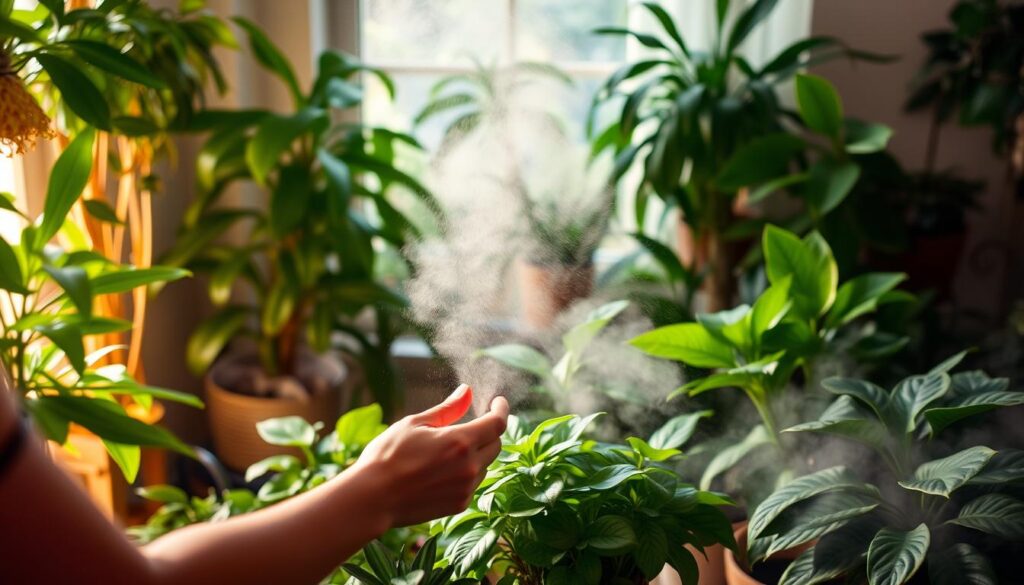
To keep indoor plants happy, you can make the air around them more humid. One easy way is by spraying water on them often. This helps create the wet air many plants love. Another way is using water-filled pebble trays to boost air moisture.
Also, a humidifier can really help with how to care for indoor plants. It keeps the air moist, which is great in dry winters.
Here is a detailed comparison of the methods to increase humidity:
| Method | Pros | Cons |
|---|---|---|
| Misting | Easy to implement, inexpensive | Temporary effect, frequent application needed |
| Pebble Trays | Simple setup, continuous effect | May require regular water refilling |
| Humidifier | Consistent humidity levels, ideal for multiple plants | Cost of purchase and maintenance, requires electricity |
Using these tips, you can make your indoor plants healthier and happier. By knowing how to care for indoor plants based on their humidity needs, your indoor garden will glow. This will make your space more beautiful and full of life.
Common Mistakes in Plant Placement
Putting your indoor plants in the right spot is key for them to thrive. A lot of newcomers mess up where they place their plants. This can slow down growth or make the plants die.
One big error is not watching out for drafts. Your plants shouldn’t be near windows or doors with cold air coming in. This cold air can hurt even the toughest indoor plants, causing them to grow poorly and lose leaves.
Not giving enough light is another big mistake. Every plant needs a certain amount of light. Putting a plant where it’s too dark or too bright can harm its growth. It’s important to learn about what your plants need.
Another issue is when the temperature keeps changing. Don’t put plants too close to things that heat or cool the air a lot. These changes can stress out your plants and hurt their health.
It might seem smart to put a plant in a corner to save space. But this can block the air it needs to grow well. Making sure your plants get enough air is a big deal.
Here’s a quick comparison table of correct vs. incorrect plant placements:
| Correct Placement | Incorrect Placement |
|---|---|
| Away from Drafts | Near Windows or Doors with Drafts |
| Proper Light Conditions | Insufficient or Excessive Light |
| Stable Temperature Spots | Near Heating/Cooling Vents |
| Open Areas for Airflow | Isolated Corners |
By steering clear of these common plant placing mistakes, you’ll make a perfect spot for your plants. Following good care tips is a must. Putting your plant in the best spot can make a huge difference.
Conclusion
By now, you know the basics of taking care of plants inside. We’ve covered how to pick the right plants, their needs for light and water, and fixing common problems. Taking care of plants inside is fun. It’s about learning and taking care of your plant friends.
Starting out, remember light, water, and the right soil are very important. Our guide about watering plants inside showed how these things help your plants stay healthy. If you keep taking care of them, your home will be full of beautiful plants.
Taking care of plants inside is good for you and makes your home look nice. It cleans the air and makes your place prettier. Use the tips from this guide and see your garden inside grow. Happy planting!