Explore the exciting world of scuba diving with our detailed guide. Learn how to become certified and start your underwater adventures. With help from experts and training, you’ll learn how to dive safely. If you love the ocean or the excitement of exploring new places, start your diver certification here.
Key Takeaways
- Begin your scuba journey with a thorough understanding of certification requirements.
- Learn the importance of professional training and the skills you will acquire.
- Explore the various levels of scuba certification available to divers.
- Find out the differences between popular certification agencies like PADI and SDI.
- Prepare yourself with essential swimming and medical prerequisites for the course.
- Understand the full cost of getting scuba certified, including fees and equipment rental.
Why Scuba Certification is Essential
Getting your scuba certification is key for diving safely. It makes sure you know how to handle diving gear and understand underwater signs. By learning these skills, you’ll get more out of your dives.
The Importance of Training and Skills
When you take a scuba certification course, you learn important things. Like how to use your equipment and what to do in emergencies. Taking a course, such as the PADI Open Water Diver course, gets you ready for many underwater situations.
What You Can Do With a Certification
Getting certified opens up new underwater worlds. You can rent gear, get tank refills, and dive all over the world. Plus, you join a group of divers who help protect the ocean. You can also explore deep sites and even teach diving someday.
Understanding Scuba Certification Levels
Starting to explore underwater? Knowing about scuba diving certification levels is key. You can get certified online or in traditional classes. Each level teaches new skills for safe and fun diving.
Open Water Diver
The Open Water Diver level is for beginners. It teaches important skills like how to control your buoyancy, find your way underwater, and handle emergencies. After getting this certification, you can dive down to 60 feet.
Advanced Open Water Diver
After learning the basics, the Advanced Open Water Diver course makes you better. You’ll do five special dives, including deep diving. This lets you see more exciting places underwater. It’s perfect for divers wanting to go deeper.
Specialty Courses
Specialty courses focus on interests like taking photos underwater or exploring wrecks. You get to pick what you learn. This makes diving more fun and improves your skills.
Rescue Diver and Beyond
Getting a Rescue Diver certification is important for safety. It teaches you how to help others in emergencies. After this level, you can aim for professional certifications. This means you could teach diving or lead dives, making diving safer and more enjoyable for everyone.
How to Choose Your Scuba Certification Program
Finding the right scuba certification is key to a great diving experience. There are many programs out there. It’s vital to learn what each offers to choose wisely.
PADI vs. SDI: What’s the Difference?
PADI and SDI are top names in scuba certification. PADI is known for its wide reach and set courses. This makes finding scuba certification near me easy. SDI brings tech into training, appealing to younger divers. Both offer thorough training. So, your choice might depend on what you like more and what’s easier to get to.
Criteria for Selecting a Dive Center
Choosing the right dive center is essential for a safe and fun learning time. Here’s what to look for:
- Instructor Qualifications: Ensure the teachers are experienced and certified.
- Safety Records: Look into the dive center’s safety steps and history.
- Equipment Quality: The gear should be up-to-date, in good shape, and fit the courses.
- Customer Testimonials: Read reviews to see how past students felt about their experience.
Researching these points helps find the best scuba certification programs. The right program can make your diving journey amazing.
Preparing for Your Scuba Certification Course
Starting your diving journey needs careful prep for your scuba course. It’s important to be fit, good at swimming, and have all the right gear. This will help you do well.
Medical Requirements
First, you need to check your health for diving. Talk to a doctor to make sure you’re okay to dive. This step makes sure you’re healthy enough for a safe dive.
Swimming Skills Assessment
Next, you need to see how well you swim. Good swimming skills matter a lot. If needed, work on getting better at swimming. Being comfy in water makes you confident when you dive.
Gathering Your Gear
Having the right gear is key for your diving course. You need things like masks, fins, and wetsuits. You can buy or rent most of this gear. Make sure everything fits right and feels good.
| Essential Gear | Description |
|---|---|
| Mask | Provides clear vision underwater, a perfect fit prevents water ingress. |
| Fins | Enable efficient movement underwater, customizable to individual size. |
| Wetsuit | Offers thermal protection, ensuring comfort in various water conditions. |
Step-by-Step Scuba Certification Guide
Getting certified in scuba diving is exciting. Our guide will show you how to get started. You’ll learn about eLearning and the important steps until the final dives in open water.
eLearning and Classroom Instruction
Begin your scuba certification online for flexibility. You’ll study diving basics, equipment, and safety online. Knowing this helps with your next dive stages. Classroom lessons give real-time help and answers from teachers.
Confined Water Dives
With theory knowledge in hand, you start pool dives. These practice sessions let you breathe underwater for the first time. Your instructor will teach you key skills while keeping a close eye on you.
Open Water Dives
The final step is diving in open water, which is the most exciting. You use your pool skills in real conditions. You need two to four sessions to get good at different underwater tasks.
To learn more steps and tips, check out resources like “The Ultimate Beginner’s Guide To Scuba.” It has over 550 pages of useful info for your scuba journey.
Costs Involved in Getting Scuba Certified
The cost to get scuba certified can change a lot. This depends on where you do it, how well-known the dive center is, and the level of scuba diving certification you want. Knowing about these costs can help you plan your money better.
Course Fees
Course fees make up a big part of the total scuba certification cost. These fees pay for the hands-on and classroom lessons needed for the scuba diving certificate. The price for an Open Water Diver course can be between $300 to $600. This depends on the dive center and where it’s located.
Equipment Rental Costs
Next to course fees, renting equipment can also add to the cost of scuba certification. You might need to rent important gear like fins, masks, snorkels, and wetsuits. Some courses may offer these, but not all do. Renting can cost between $50 to $150. This depends on how long you need the gear and what gear you need. Buying your own gear could save money over time.
Travel and Accommodation
If you want to get your scuba certification in a faraway or popular place, think about travel and staying costs too. Prices can change a lot based on the place, the time of year, and where you stay. You need to plan for plane tickets, a place to stay, and food. This can add a lot to the total cost of getting scuba certified. Looking for deals early can help with these costs.
Skills You Will Learn During Certification
While getting scuba certified, you will learn key skills. They are important for your safety and skill underwater. These skills are a must for anyone wanting to follow scuba certification requirements.
Basic Scuba Skills
You start with basic scuba skills in your certification. You learn how to manage buoyancy, use dive computers, and handle scuba gear. These skills are key for safe and fun dives.
Emergency Procedures
Knowing emergency procedures is also important. It’s part of the scuba certification guide. This covers handling air shortages and gear problems. Being ready for these issues is crucial for divers.
Environmental Awareness
Being aware of the environment is also key. It’s covered in the scuba certification guide. You need to dive in ways that protect underwater life. This makes sure diving can continue for years to come.
Locations for Getting Your Scuba Certification
You can get your scuba certification many places. Choose from local dive centers or exotic spots abroad. Each offers different perks for getting certified.
Local Options
Looking for “scuba certification near me”? Local dive centers are great. They’re cheaper because you don’t spend on travel or places to stay. Plus, they’re convenient. You can take classes over a couple of weekends. This works well for busy folks.
Travel Destinations
Want to learn while on vacation? There are amazing spots worldwide. Think about diving at the Great Barrier Reef, Cozumel, or the Red Sea. These places have stunning sea life and wrecks. Sure, it might cost more. But diving in these spots is unforgettable.
| Local Options | Travel Destinations |
|---|---|
| Lower scuba certification cost | Higher scuba certification cost |
| Convenience and flexibility | World-class diving locations |
| Weekend courses available | Combination of vacation and learning |
What to Expect During Your First Dives
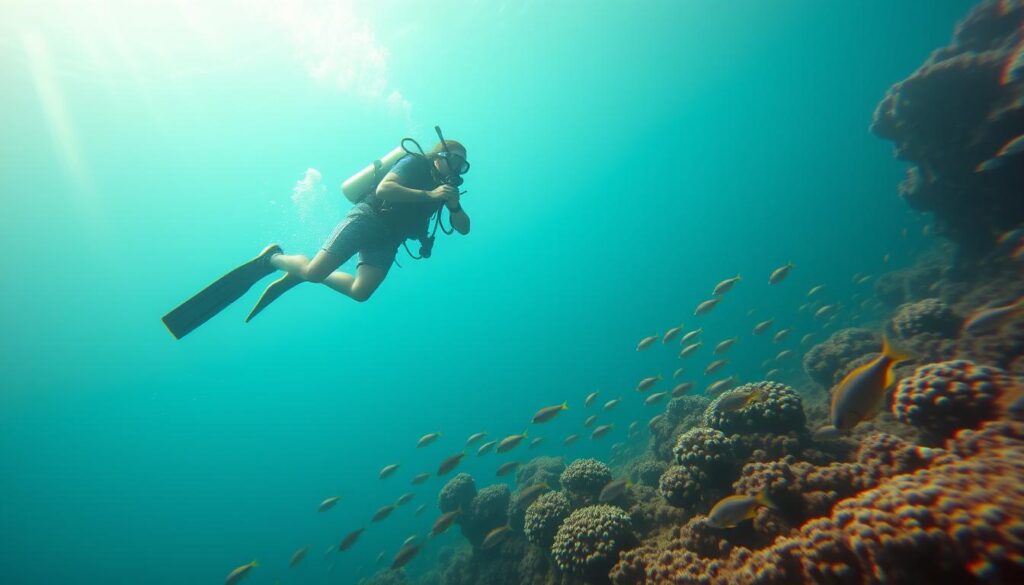
Your first dives can be exciting yet a bit scary. You’ll use your new skills with an experienced instructor’s help. You and your dive buddy will explore underwater together. This helps build your scuba skills and prepares you for more dives.
Navigating Underwater
Learning to find your way underwater is key. You’ll practice using a compass and spotting landmarks. These skills make diving safer and more fun. You’ll follow paths and return to where you started confidently.
Working with Your Dive Buddy
Working well with your dive buddy is very important. You’ll learn to communicate and check on each other. Practicing safety steps together makes diving safer and more enjoyable. It shows diving is better when shared.
| Key Skills | What to Expect |
|---|---|
| Underwater Navigation | Learn to use a compass and natural cues to navigate your dive routes efficiently. |
| Dive Buddy Communication | Practice essential signals and regular status checks to ensure both divers are safe and aware. |
| Emergency Procedures | Understand and rehearse protocols for handling underwater emergencies with your buddy. |
As you start diving after your online certification, these skills are crucial. Embrace learning them. Soon, you’ll find diving thrilling and rewarding.
Continuing Your Scuba Education
After you get your first certification, many divers want to learn more. They take advanced scuba courses. This helps them know more and have more fun under the water.
Advanced Certifications
The Advanced Open Water Diver is one kind of advanced course. It covers harder diving skills. You’ll do adventure dives like deep diving and learn about navigation.
Getting advanced certification makes you more confident. It lets you see new things underwater.
Specialty Courses
Specialty courses focus on what interests you. Maybe you like night diving or taking pictures under the sea. There’s a special course for your hobby.
These special courses make diving even more exciting. They teach you more about what you love.
Becoming a Dive Instructor
Some people love to teach others about diving. They become dive instructors. This job is very rewarding.
It requires lots of advanced training. You will be able to teach diving to beginners. You help start a community of divers who love the sea.
Conclusion
Getting a scuba diving certification opens a big world under the sea. It starts with the basic Open Water Diver course and goes up to advanced levels. Each step gives you important skills. This makes your diving fun and safe.
Learning to dive means you are ready to practice and meet the needed physical health. You will need to pay for the course, rent equipment, and maybe travel. Choose what excites you. And look for chances to grow and see more.
Diving is an amazing trip. Always be safe and keep learning more. Share what you love with others who dive. Respect the ocean as you explore. Each dive makes you care more about underwater life. You help protect it.
Scuba diving is fun, whether just for fun, discovery, or as a job. It helps you understand nature better and love the ocean for life.