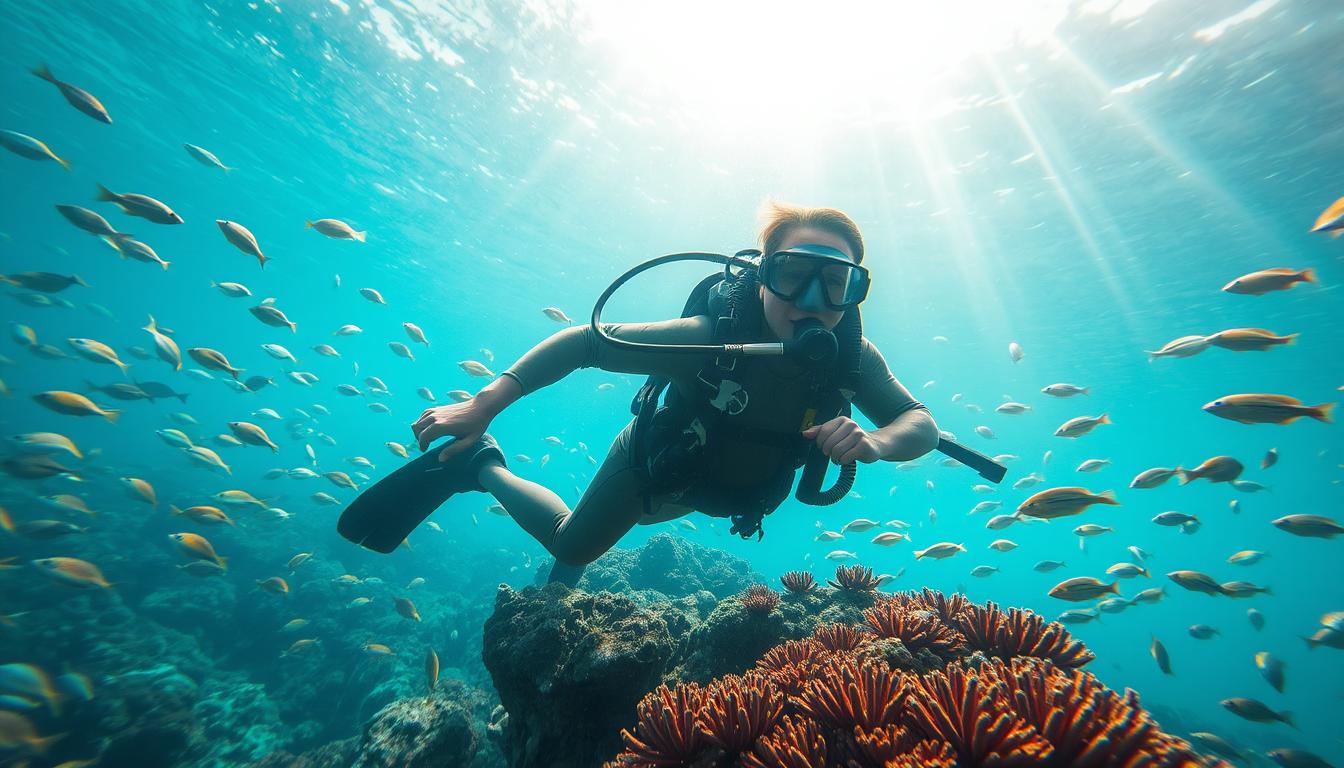
Starting your first scuba dive can be very exciting and a bit scary. The ocean hides many wonders like colorful fish, beautiful corals, and a peaceful quiet. To enjoy diving safely, newcomers must learn the basics well. By getting ready properly, beginners will switch fear for confidence. This makes diving not just safe but also fun.
Key Takeaways
- Proper preparation leads to a confident dive.
- Understanding the basics ensures safety.
- Investing in the right gear improves the experience.
- Diving with a buddy enhances security.
- Learning hand signals is crucial for communication.
The Importance of Pre-dive Preparation
Getting ready for a scuba dive is a big deal. Pre-dive preparation helps divers feel sure and accurate underwater. This guide offers tips for beginners to prepare for diving.
Getting Organized the Night Before
A top tip is to get your scuba gear ready the night before. It saves time and stops you from forgetting stuff. Being well-prepared makes diving safer.
- Double-check your scuba gear setup, ensuring all parts are functioning properly.
- Pack personal items such as a towel, sunscreen, and a change of clothes.
- Review any specific instructions or requirements provided by the dive operator.
The Role of a Dive Plan
Making a dive plan is key before diving. A good plan makes the dive safer and more fun. It helps everyone know what to expect.
| Components | Details |
|---|---|
| Entry and Exit Points | Identify safe locations to enter and exit the water. |
| Expected Conditions | Check the weather, water temperature, and visibility. |
| Communication Strategies | Establish hand signals and communication plans with your dive buddy. |
Following these tips and getting ready well can make diving great. Having all your gear set and a solid plan means a lot for a good dive.
Essential Gear for Beginner Divers
Diving is super exciting but you need the right gear to be safe and have fun. If you’re new to diving, it’s super important to know what gear you need. The right gear makes your dive better and keeps you safe underwater.
Basic Equipment Checklist
If you’re starting out, having a gear checklist is super helpful. Let’s look at what you need for diving:
- Mask: Lets you see clearly underwater.
- Fins: Help you move smoothly through the water.
- Snorkel: Lets you breathe easily when you’re at the surface.
- Regulator: Gives you air from your tank.
- Buoyancy Control Device (BCD): Helps you stay balanced underwater.
- Dive Computer: Keeps track of your dive to keep you safe.
- Wetsuit: Keeps you warm in cold water.
Make sure you have all these items to avoid problems. Checking them off helps with safety for beginners.
Investing in a Quality Dry Bag
It’s also crucial to get a good dry bag. A dry bag protects things like your phone and keys from water. Choosing a strong, lasting dry bag keeps your stuff dry. This way, you can dive without worrying about your belongings.
Understanding Diving Signals
Being clear underwater keeps everyone safe. Knowing scuba signs makes diving better. It’s key when starting to dive.
Common Hand Signals
There are key signs every diver should know. Signs for “OK,” “Up,” “Down,” “Stop,” and low air are vital. They help us talk without words, stopping confusion under water.
Learning from Experienced Divers
Diving with pros helps a lot. They show you signs in action. It helps more than just class does. This practice makes you feel sure and skilled under water.
Beginner Diving Tips
Diving is thrilling but needs prep and care. For new divers, knowing the basics is key for a fun, safe dive. Here are some top tips for beginner divers.
Learn about your dive gear first. Knowing how your gear works will make you feel more sure. It’s also good to take a refresher course if you haven’t dived in a while. This helps you remember important skills and keeps you safe.
Good breathing is crucial. It helps save your air, which is very important. Don’t hold your breath as it can cause problems. Practice taking slow, deep breaths. Do this in the water and on land to get better at it.
Be aware of where you are. Always check how deep you are and your air left. Dive with a buddy, too. The “buddy system” makes diving safer. If something goes wrong, having a friend with you helps a lot.
Treat sea creatures with respect. Don’t touch or bother them. This keeps you safe and protects the ocean life.
Plan your dives well. Check the weather and know the dive site before you go. A checklist for your gear can help. Make sure you have everything, from fins to snorkels. Here’s a checklist for you:
| Equipment | Check |
|---|---|
| Mask | ✓ |
| Fins | ✓ |
| Snorkel | ✓ |
| Dive Computer | ✓ |
| Regulator | ✓ |
| Buoyancy Control Device | ✓ |
| Wet Suit | ✓ |
Enjoy your dive with these tips. They will make your experience better. You can safely explore the sea world with confidence.
Overcoming Dive Anxiety
Feeling nervous before or while diving is normal for new divers. There are great ways to reduce scuba diving anxiety and enjoy your dive. Stay near your dive buddy and talk clearly with the divemaster. This helps you feel more sure and manage worry well.
Staying Close to Your Dive Buddy
Being near your dive buddy is a top beginner scuba diving advice. It makes you feel safe and gives you quick help if needed. Enjoying the dive together makes you more calm and positive. It really helps with lessening dive anxiety.
Communicating with the Divemaster
Talking with the divemaster is key to enjoy diving and handle anxiety. Tell them if you are worried before the dive. They can then give beginner scuba diving advice just for you. They offer extra support and watch you closely during the dive. Good communication builds trust and helps reduce scuba diving anxiety.
Mastering Boat Entry and Exit Techniques
It is key for divers to get good at boat entry and exit methods. This know-how increases divers’ confidence and safety. It also helps to stop injuries and make getting in and out easier.
The Giant Stride
The Giant Stride is a well-known way to get into the water. Divers stand at the boat’s edge with fins out. They look ahead, then step forward big while holding their dive mask and regulator. This way, divers get into the water fast and stay balanced.
Backwards Roll-off
The Backwards Roll-off is another popular entry method. It’s great for small boats. Divers sit on the boat’s edge, face the inside, and roll back into the water. This method is easy on the diver’s body and gear.
Getting out of the water right is just as important. Divers can use ladders or platforms to get back on board. They should hold onto their gear and watch out for things that can hurt them. Being good at these techniques makes diving safer and more fun.
Dive Safety Protocols
It’s key to follow rules to make diving safe and fun. Diving safety tips for novices stress watching your air and managing currents and waves well. These tips will make you feel more confident and skilled under the water.
Monitoring Your Air Supply
Watching your air closely is vital. Beginner diving tips advise often checking your gauge. This ensures you have enough air to go up safely and stop for safety.
| Air Supply Monitoring Tips | Recommended Actions |
|---|---|
| Check Pressure Gauge | Every 5 minutes |
| Reserve Air Supply | At least 500 psi |
| Ascend Early | Once air supply reaches 1000 psi |
Handling Currents and Waves
Knowing how to deal with currents and waves is key for safety. Start your dive swimming up-current to make coming back less hard. Use natural things like rocks to hide from strong currents and don’t swim against the water’s flow.
Following these beginner diving tips keeps you safe and makes diving fun and memorable.
Hiring a Dive Guide for Extra Support
If you’re new to scuba diving, it’s smart not to go alone. A great first step is hiring a dive guide. They give you the kind of help that makes you feel more sure and skilled.
When talking about tips for new divers, experts think having a dive guide is key. A guide can watch you and offer help that fits just what you need. They can help you get better at moving underwater and taking care of your gear.
Another big plus of hiring a dive guide is feeling more at ease. Just knowing a pro is close by can really calm your worries. This lets you enjoy seeing the sea life more. You get safer and better at diving with a good guide with you.
Maintaining Proper Buoyancy
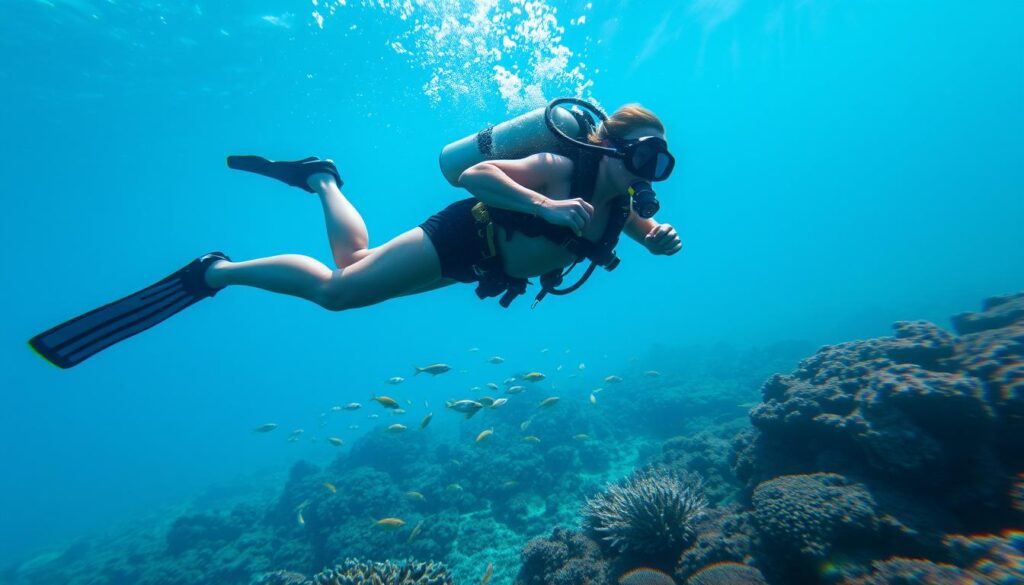
Learning buoyancy control for beginners is vital. It’s one of the best scuba diving tips out there. It keeps you safe and makes diving fun. Knowing about buoyancy saves energy. It also keeps underwater life safe by preventing reef damage.
Firstly, know how your wetsuit affects buoyancy. When wet, wetsuits lose some buoyancy. This is because of air bubble compression. Thicker wetsuits add more buoyancy. So, think about how much weight you need. Beginners often wear too much weight. It’s important to check your buoyancy often. Then, adjust as needed.
Another tip is to breathe deeply and calmly. Use your diaphragm for this. This helps keep your buoyancy steady. When you’re correctly weighted, you’ll float at eye level with an empty BC. But you need a full breath in your lungs. If you exhale and start to sink slowly, your weight is just right.
Muscle and fat affect buoyancy too. Muscle sinks easier than fat. So, if you’re muscular, you might need less weight. Also, saltwater is denser than freshwater. You will need more weight for the sea. Less weight is needed for freshwater.
| Type of Water | Weight Needed | Buoyancy Control Factors |
|---|---|---|
| Fresh Water | Less weight | Lower density, adjust weights down |
| Salt Water | More weight | Higher density, adjust weights up |
For new divers, paying attention to these diving tips is key. Practice a lot. Remember not to hold your breath underwater. Always breathe evenly. Using these tips will sharpen your skills. Your dives will become more fun and precise.
Tips for Night Dives
Night diving shows us underwater life in a new light, exciting many divers. But, diving at night needs certain skills and a calm mind. We’ll share key tips for beginners, like using dive lights and staying calm in low light.
Using a Dive Light
A good dive light is a must for night dives. It lets you see, talk to your dive buddy, and watch sea life. Pick a light that’s bright, lasts long, and is easy to handle. Have a main light and a backup to be safe.
To talk under water, use light signals like strokes or waves. Don’t shine lights on sea creatures, as it scares them. Keep the light in front of you to stay safe and know where you are.
Staying Calm in the Dark
Diving in the dark might seem scary. A top tip is to breathe slowly and steadily. This keeps you calm and helps you float better. Use your light to look around often. This makes you feel safe.
It’s important to dive with a friend. Stay close and use hand or light signals a lot. This makes you feel less alone and keeps you both safe.
Night diving is thrilling for all divers. With the right tips, like using lights right and staying calm, you’ll have a great dive in the dark.
| Gear/Skill | Importance |
|---|---|
| Dive Light | Provides visibility and communication |
| Regulated Breathing | Helps reduce anxiety and maintain buoyancy |
| Dive Buddy System | Ensures safety and mutual support |
Conclusion
Jumping into scuba diving is thrilling! It’s key to stick to the basics we talked about. Preparing before diving and organizing your stuff is crucial. Make sure to get important gear, like a top-notch dry bag.
Talking right with your dive buddy and divemaster is super important. Knowing how to get in and out of the boat makes diving smooth. This helps keep everything safe and fun.
Always keep an eye on your air and know how to handle strong currents. Getting a dive guide, mastering how to float, and trying new dives are great ideas. The basics you learned are the building blocks for awesome dive adventures ahead.