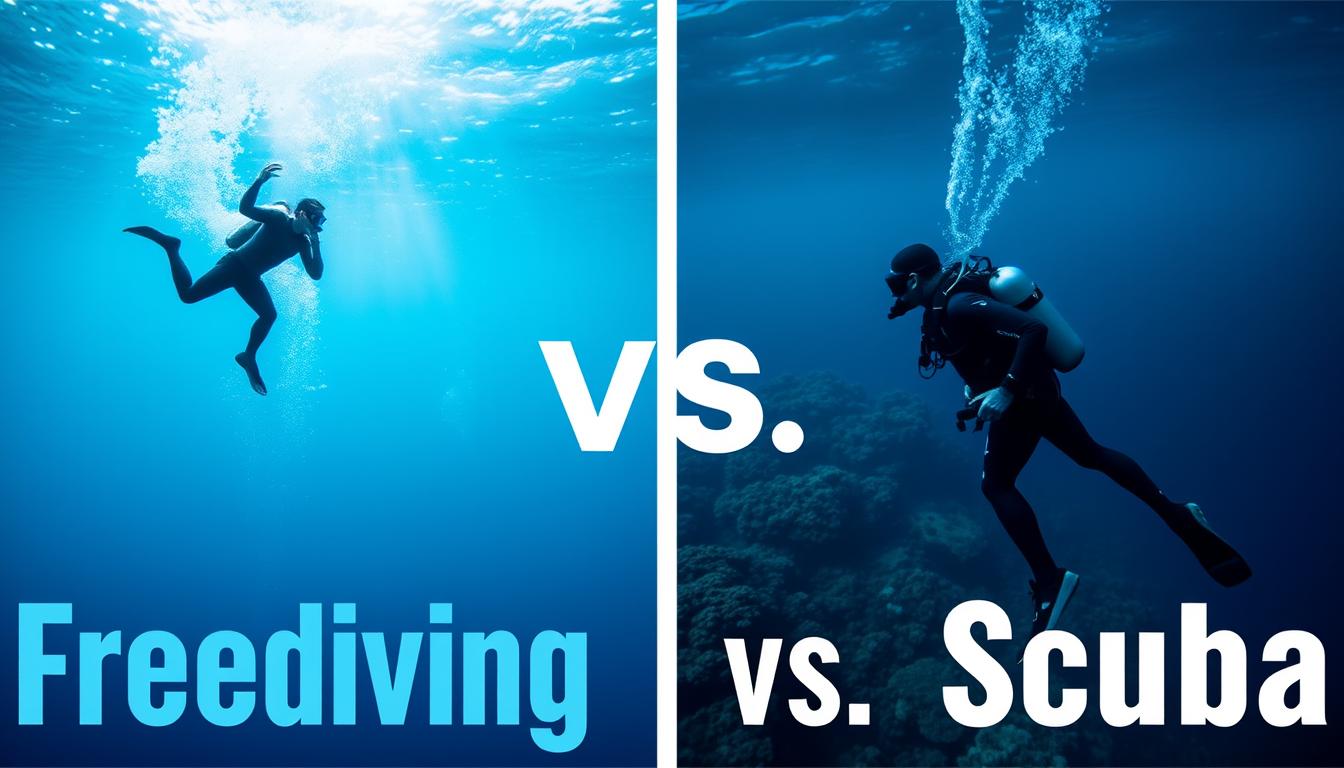
Exploring the underwater world is amazing. You can choose between freediving and scuba diving. Each has unique experiences for different people. Knowing about freediving vs scuba helps you pick the best adventure. We’ll look at how they differ, including techniques, gear, what you need to learn, costs, and how they affect nature.
Key Takeaways
- Freediving uses minimal equipment, primarily a dive mask, fins, and snorkel.
- Scuba diving requires more gear, including a regulator, tank, and buoyancy control device.
- Freediving courses are shorter and focus on breath control and safety skills.
- Scuba diving involves comprehensive training, starting with the PADI Open Water Diver course.
- Freediving vs scuba impacts the environment differently, with freediving being more eco-friendly due to its minimalistic approach.
What is Freediving?
Freediving lets people dive without extra breathing gear. It’s a special way to see underwater places. Freedivers feel free and at peace in the water.
Freediving Techniques
Improving freediving skills is key. It needs good breath control and saving energy. Practice and training help a lot.
Benefits of Freediving
Many things make freediving great. It lets divers get close to sea creatures quietly. There are no bubbles to scare them away.
Wearing less gear means moving easily. Divers feel more connected to the sea.
- Enhanced physical fitness and lung capacity
- Improved mental focus and relaxation
- Opportunity to explore some of the best freediving destinations around the world
Equipment Needed
Freediving needs less gear than scuba diving. You need a mask, fins, snorkel, and maybe a wetsuit. This makes it easier and lets divers feel the water better.
What is Scuba Diving?
Scuba diving is a way for people to explore underwater. It stands for Self-Contained Underwater Breathing Apparatus. With special gear, divers can breathe underwater and stay deep for a long time. They get to see amazing sea life.
Scuba Diving Techniques
Divers learn important skills for scuba diving. They learn to watch their air, control how they float, and move safely under the sea. Getting good at these skills is a must. They are a big part of earning a scuba diving certification.
Benefits of Scuba Diving
Scuba diving offers many bonuses. It’s great for both your body and your mind. Divers can visit stunning ocean places and see all kinds of sea animals. The peace below the waves can also calm your mind.
Equipment Needed
To scuba dive, you need several special items. Important gear includes a regulator, air tank, and a dive suit. Each piece helps keep divers safe and comfy in the water. Learning to use them well is key to getting a scuba certificate.
| Equipment | Purpose |
|---|---|
| Regulator | Delivers air from the tank to the diver |
| Air Tank | Provides the compressed air supply |
| Buoyancy Control Device (BCD) | Allows the diver to maintain neutral buoyancy |
| Dive Computer | Monitors depth, time, and remaining air |
| Wetsuit | Provides thermal protection and comfort |
Freediving vs Scuba: Key Differences
Freediving and scuba diving are different in a few major ways. Freediving is about using your breath and being simple, while scuba diving uses special gear to stay under longer.
Freedivers take one big breath to explore underwater. They only need fins, a mask, and a snorkel. This makes them feel more connected to the sea. Scuba divers, on the other hand, use a system that lets them breathe under water for a while.
Freediving is more about how good you are at holding your breath and using your body. Scuba diving relies on lots of gear like air tanks, regulators, and suits. It’s all about the equipment.
How long you can stay underwater is also different. Freedivers have short dives. They are holding their breath. Scuba dives are longer because of the gear that helps them breathe.
Here is a simple way to see how freediving and scuba diving are different:
| Aspect | Freediving | Scuba Diving |
|---|---|---|
| Breathing Techniques | Breath-Hold | Compressed Air |
| Equipment | Minimal: Mask, Fins, Snorkel | Extensive: Tanks, Regulators, BCD |
| Dive Duration | Shorter Due to Breath-Hold | Longer Due to Breathing Apparatus |
Training and Certification Requirements
It’s important to know about training and certification when deciding on freediving or scuba. Both have their own training styles. They teach you the skills and safety you need.
Freediving Courses
Freediving starts with the basics. You learn how to control your breath, even out pressure, and stay safe. Beginners take a simple course first. It teaches how to hold your breath longer and handle pressure underwater. Later, you can try more complex courses for deeper dives. PADI’s Freediver Course and SSI’s Freediving Level 1 are big hits.
Scuba Diving Courses
Learning scuba diving is thorough and strict. You usually begin with the Open Water Diver course from groups like PADI or NAUI. This first step teaches you about safety, how to use gear, and how to find your way underwater. After the basic course, there are more advanced and special courses available. You can learn about Advanced Open Water Diver, Rescue Diver, or even deep-sea diving.
| Aspect | Freediving | Scuba Diving |
|---|---|---|
| Initial Training Focus | Breath Control, Equalization | Dive Safety, Gear Usage |
| Basic Certification Providers | PADI, SSI | PADI, NAUI |
| Advanced Courses | Freediving Level 1, Advanced Freediver | Advanced Open Water Diver, Rescue Diver |
Duration and Depth Capabilities
Freediving and scuba diving let us explore underwater in different ways. Knowing how deep and how long you can stay helps you choose your adventure.
Freediving Limits
Freediving is diving deep on one breath. It usually goes down to 40 feet. It’s liked in best freediving destinations around the world. Each dive lasts a few minutes, offering a quick underwater visit.
Scuba Diving Limits
Scuba diving uses an air tank for longer dives. Divers can go down to 130 feet. They can stay under for more than 30 minutes. This lets them see more underwater. Scuba diving is great for taking pictures and studying at best freediving destinations.
| Aspect | Freediving | Scuba Diving |
|---|---|---|
| Typical Depth | Up to 40 feet (12 meters) | Up to 130 feet (40 meters) |
| Duration | Few minutes | 30 minutes or more |
| Breathing Method | Single breath | Air tank |
Physical Fitness Requirements
Freediving and scuba diving need different types of fitness. Both need you to be fit, but in different ways. This helps divers get ready and enjoy their time underwater.
Fitness for Freediving
Freediving needs great heart health, strong core muscles, and long breath-holds. A good respiratory system is key. Doing cardio like running, biking, and swimming helps a lot. It builds stamina for longer breath-holds.
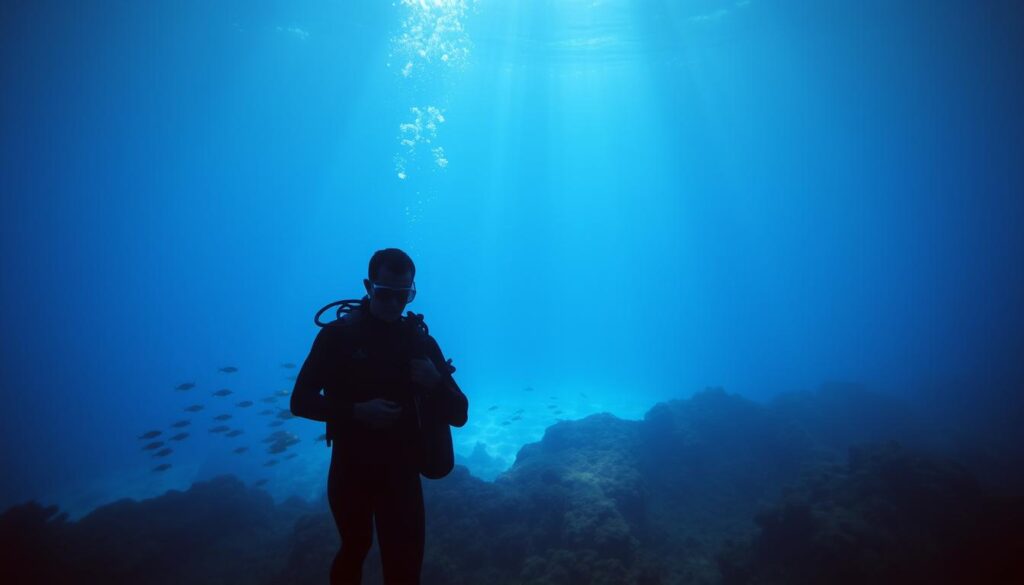
For freediving safety, practicing good breathing is key. Diaphragmatic breathing is one technique. It helps fill your lungs to the max. A mix of fitness work makes sure divers can face freediving’s challenges.
Fitness for Scuba Diving
Scuba diving means dealing with heavy equipment and staying balanced underwater. You don’t need to control your breath as much. But, you do need strong muscles and stamina. Training with weights, especially for your legs, back, and shoulders, is good. It makes wearing the gear easier and keeps you comfy underwater.
Being good at cardio helps scuba divers use oxygen better and keep their energy up. Doing aerobic exercises regularly is great for this. Knowing the fitness needs for freediving vs scuba is super important. It makes sure you’re ready for what each one requires.
Costs and Accessibility
It’s key to know about the costs and how easy it is to start freediving vs scuba diving. We’re going to look at the money involved and how simple it is to begin for anyone interested.
Cost of Freediving
Freediving doesn’t cost much. It’s because you only need simple gear and basic training. You will need things like a mask, snorkel, fins, and a wetsuit. These can be bought without spending a lot. Training courses are quite cheap too, fitting many budgets. This means more people can try freediving.
Cost of Scuba Diving
On the other hand, scuba diving asks for more money at the start. You need lots of gear like tanks, regulators, and dive computers. There’s also the need for deep training and getting a certificate. This ups the cost a lot. Plus, keeping your gear in good shape costs extra. So, scuba diving usually costs more than freediving.
| Freediving | Scuba Diving | |
|---|---|---|
| Equipment Costs | Low | High |
| Training Costs | Affordable | Expensive |
| Accessibility | High | Moderate |
Environmental Impact
When we think about the ocean, the effects of freediving and scuba diving matter. Each way we explore underwater touches marine life differently.
Freediving Impact
The environmental impact of freediving is very small. It lets people get close to sea creatures without making a big fuss. Freedivers don’t use much gear, so they are kind to the sea.
They swim softly, so they don’t bother the ocean’s homes too much. This means the sea stays healthy and happy.
Scuba Diving Impact
But, scuba diving has a bit more impact because it needs more stuff. This includes tanks and other gear needed to stay under longer. Yet, divers can be gentle to the sea by following sustainable diving rules.
By not touching the sea life and controlling their float, divers reduce harm. Groups focused on saving the sea can enjoy diving without hurting the ocean.
| Activity | Equipment Needed | Environmental Impact |
|---|---|---|
| Freediving | Minimal equipment (mask, fins, wetsuit) | Low |
| Scuba Diving | Tanks, regulators, BCD, wetsuit | Medium |
Conclusion
In talking about freediving and scuba, both have their perks for underwater fun. Freediving is simple. It uses less gear and focuses on holding your breath. It’s peaceful, like meditation, and makes your lungs and focus better.
Scuba diving, however, lets you stay under water longer and go deeper. You use a lot of gear, like oxygen tanks. This way, you can really explore underwater worlds. Scuba diving helps you spend more time with sea creatures and see more places under the sea. It makes you love nature’s variety more.
Choosing freediving or scuba depends on what you like more. Do you enjoy peace and simplicity or crave big adventures? Both give you amazing times with sea life. They make us love and understand the ocean more. Think about what you enjoy, what your body can do, and the kind of sea adventure you want.